





Real-Time QA Platform for Solar Pile Installation
Real-time QA for solar pile installation: live measurements, tolerance checks and corrective workflows in the field.
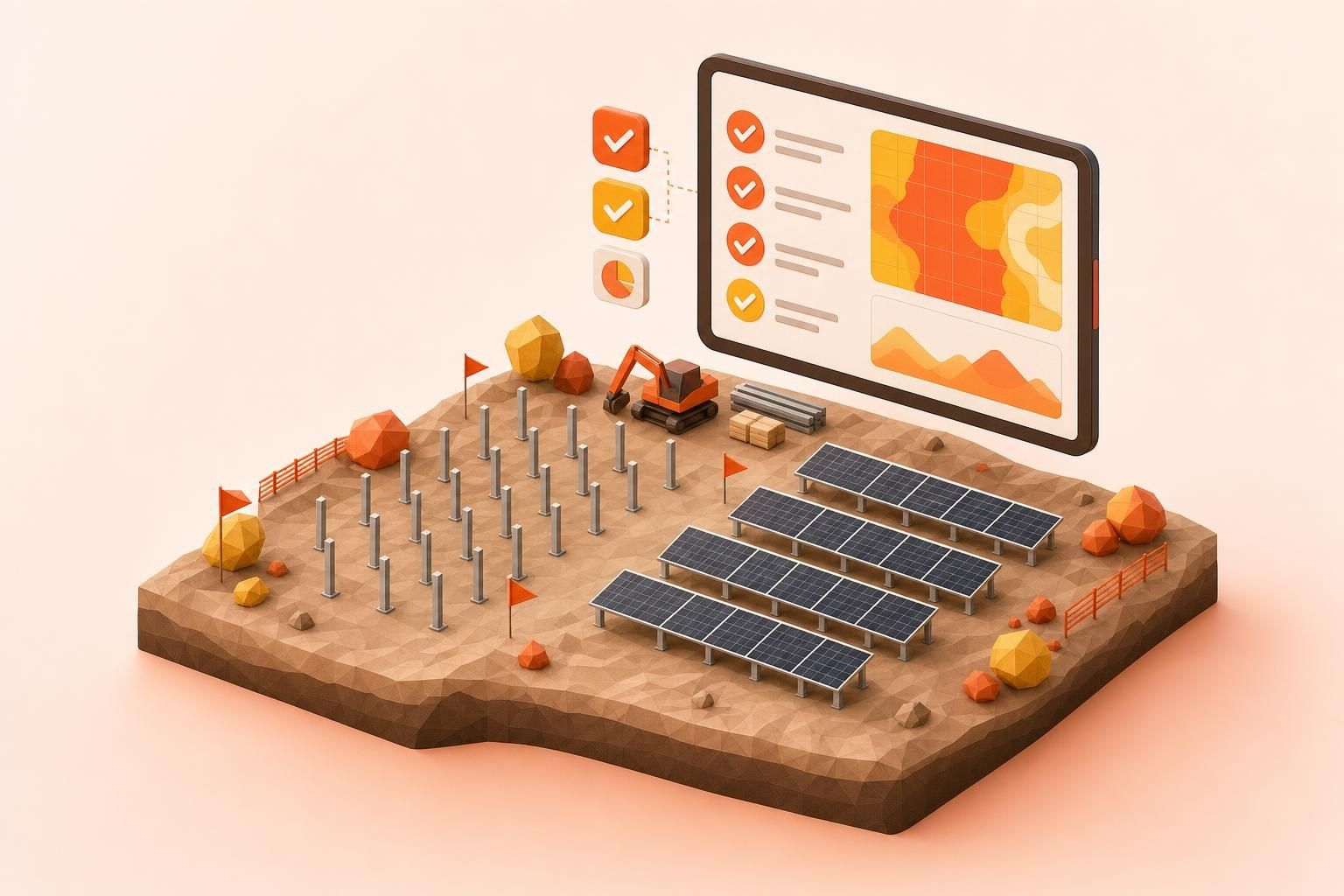
- V2shipped to production on AWS
- 770+production deploys in 2026
Context
I lead software at a construction-tech company building quality-control hardware and software for utility-scale solar farms. Our field hardware, a GNSS pile-measurement device, records each pile as it is driven. The platform turns those measurements into decisions for the people on site.
This project is the v2 rebuild of that platform.
The challenge
Pile position, verticality, twist and embedment depth were often checked manually or long after installation. By the time a problem was found, the structure above it was frequently already in progress, and fixing it meant expensive rework.
We needed measurements evaluated as they arrive, clear tasks for field crews and reports that inspectors and clients could trust.
What I built: live tolerance checks and corrective tasks for piles
A multi-service architecture, designed so each part can evolve and scale independently:
- Measurement ingest service that receives data from the field devices.
- FastAPI backend (asyncpg, PostgreSQL) that evaluates every measurement against project tolerances.
- Pile actions workflow: out-of-tolerance piles generate corrective tasks that are tracked until closed, plus a tracker validation process.
- Socket.IO hub that streams live device positions to the web app, with RabbitMQ for messaging between services.
- Inspection report exports in Excel and PDF, with files stored on S3.
- React web app (Vite, TypeScript, TanStack Query) and a separate back-office.
- Expo / React Native field app with Mapbox maps and photo and audio reports.
- CI/CD with GitHub Actions and delivery through CloudFront.
Impact: V2 in production on AWS with 770+ deploys in 2026
- Deviations are visible while crews are still on the row, not weeks later.
- Corrective work has an owner and a status instead of living in spreadsheets and chats.
- Field teams, office staff and clients work from the same source of data.
My role
As Head of Software I lead a team of around eight engineers. I set the architecture, the priorities and the engineering practices, and I stay hands-on in the backend — especially the evaluation logic, the pile actions workflow and the service boundaries.