





WebXR Digital Twin of a GNSS Field Device
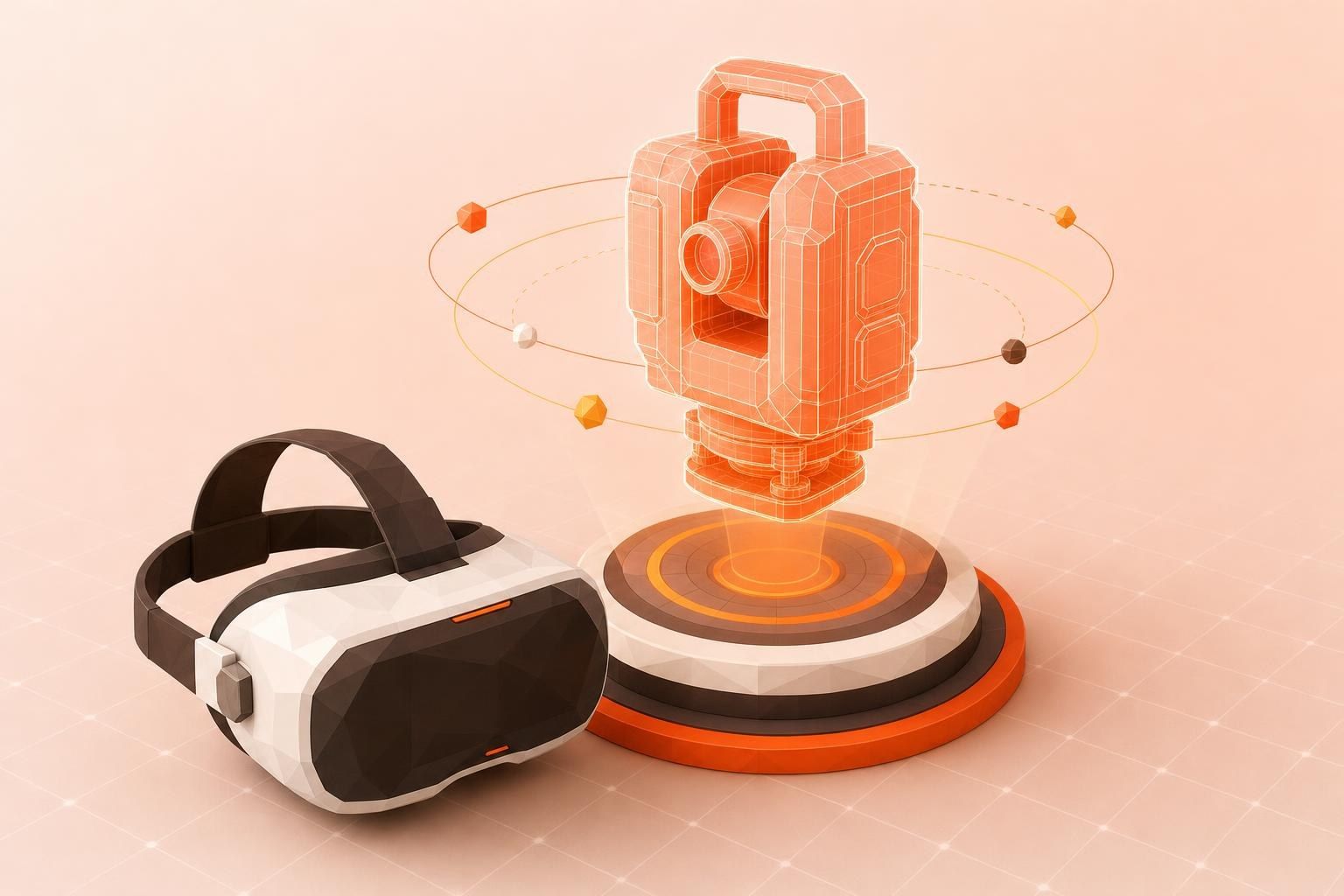
A life-size digital twin of a GNSS field device in VR and AR for Meta Quest, running in the browser.
- 28 MB → 608 KBmodel size
- 15materials preserved
Context
At a construction-tech company building quality-control hardware and software for utility-scale solar farms, our main product is a GNSS pile-measurement device used on site. It is a physical, industrial piece of equipment — not something you can easily bring to every sales meeting or training session.
The challenge
We needed a way to show the device at real scale, let people walk around it and handle it, and do this without installing an app. It also had to load quickly on a standalone headset, which ruled out shipping the raw CAD export as is.
What I built: a WebXR digital twin for Meta Quest in VR and AR
A browser-based digital twin that runs in three modes:
- VR on Meta Quest 3 and Quest Pro, with the device at life size.
- Passthrough AR, placing the device in the real room. The app detects AR support through
environmentBlendModeand adapts accordingly. - Embeddable 3D orbit viewer for regular web pages, on desktop and mobile.
Technical highlights:
- Three.js r160 with WebXR entry through
VRButtonandARButton. - Controller grab and move, so users can pick the device up and inspect it from any angle.
- Realistic lighting with a RoomEnvironment PMREM map and ACES filmic tone mapping.
- Model optimization: the CAD export went from 28 MB to 608 KB with Draco compression, while keeping all 15 materials intact.
Impact: a 28 MB model cut to 608 KB that loads near-instantly
- Sales can demo the device anywhere, at real scale, from a headset or a link.
- Operators can get familiar with the equipment before they touch the real one.
- The optimized model loads fast enough to feel instant on standalone hardware.
My role
I was the sole author: 3D pipeline and compression, scene and lighting setup, WebXR interaction, AR detection and the embeddable viewer.